

SimBuild 2026:
Bridging Research and Practice
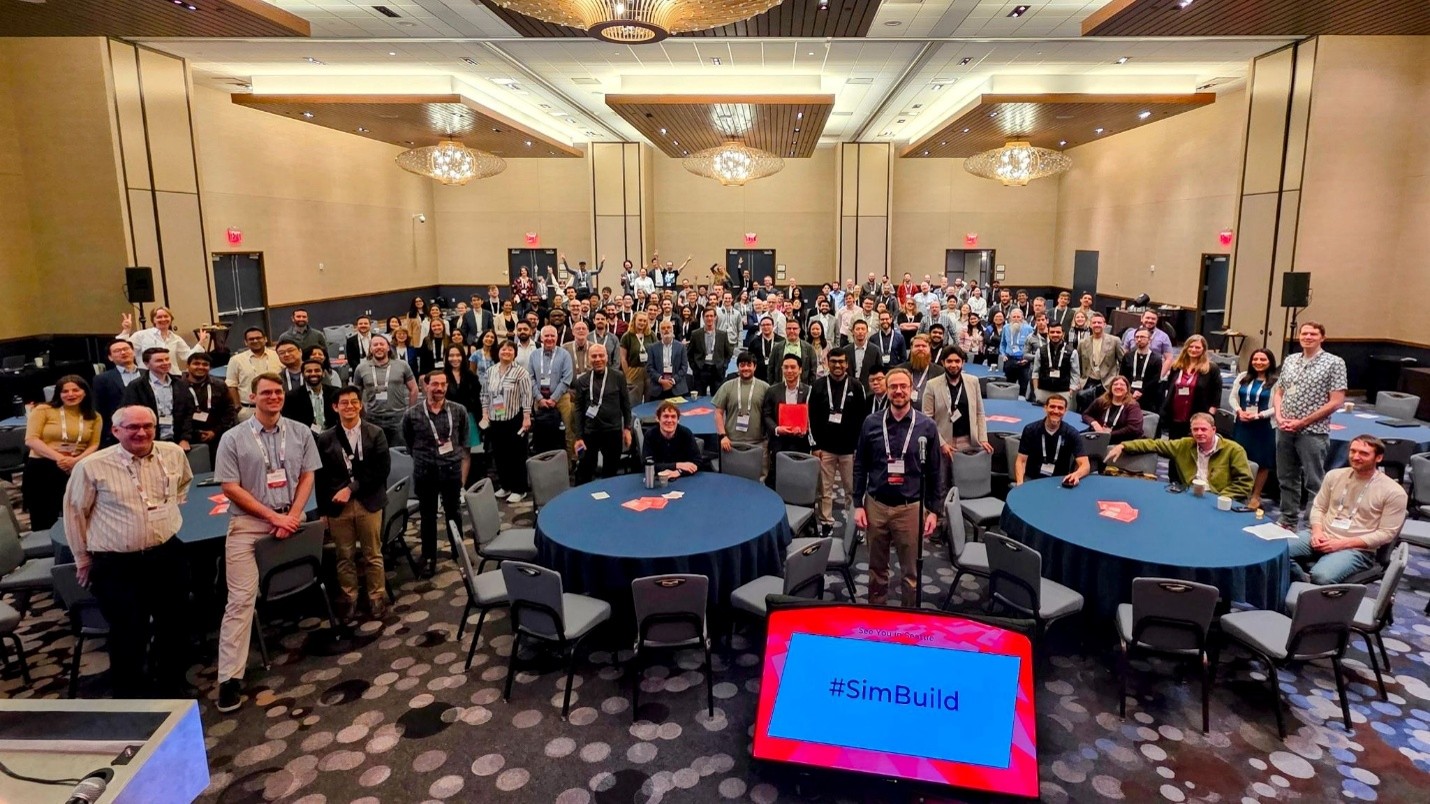
IBPSA-USA members and building performance simulation practitioners, software developers, and students met to share knowledge and insights at SimBuild 2026. Held at the Minneapolis Hyatt Regency on May 20–22, SimBuild 2026 drew over 250 attendees from across the United States and around the globe.
The three-day event was headlined by keynotes from industry leaders Anica Landreneau, Mary Ann Piette, and Rania Labib, with 40 interactive break-out sessions and extensive time for networking. The conference included presentations of 80 peer-reviewed papers, 50 short talks on current topics, and 14 seminars led by industry experts.
The SimBuild scientific committee led by Andreas Berres together with Cary Faulkner, Rick Fenrich, Alexandra Rempel, Weimin Wang, and Yunyang Ye selected papers for publication out of an initial pool of 168 abstracts with help from 200 volunteer reviewers. Those papers are now published through the IBPSA World Publications Committee.
Kicking Off with Learning
Pre-conference activities on May 19 gave attendees an opportunity to meet one another, develop new skills, and learn about Minneapolis. Notably, SimBuild 2026 gave the first offering of Building Energy Modeling: From Design Practice to Certification, a full-day workshop to prepare attendees for the ASHRAE Building Energy Modeling Professional (BEMP) certification exam. Co-developed by IBPSA-USA and Catalyst Partners, this workshop led by Catalyst Partners Vice President Amanda Bogner seeks to transform the path to certification for building performance simulation specialists.
Other kick-off activities included:
- Pollination Revit Plugin: Reliable Workflow for Exporting Revit Models as Energy Models in a Fraction of Time, a workshop led by Ladybug Tools co-founder Mostapha Sadeghipour Roudsari.
- Mastering Passive Design with IESVE, a workshop on passive design and parametric analysis led by IES Vice President Matthew Duffy.
- 3D Thermal Bridge Modelling for Code Compliance, a workshop combining code fundamentals with hands-on simulation led by Dr. Jelle Langmans, a Partner at Physibel.
- A behind-the-scenes visit to the Hennepin Energy Recovery Center, which diverts waste from landfills to generate dependable electricity in downtown Minneapolis, led by Environmental Engagement Coordinator Joe Vital.
- An architectural walking tour of downtown Minneapolis led by IES Vice President Nathan Kegel.
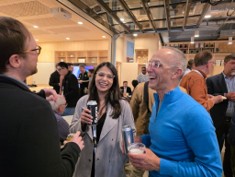
The day concluded with a welcome reception at the Minneapolis office of Perkins & Will, located in the IDS Center just blocks away from the conference hotel. Designed by Philip Johnson, the IDS Center is the tallest building in Minnesota, and the reception space overlooked its seven-story Crystal Court.
Keynote Highlights
The first day of the conference kicked off with a presentation by Anica Landreneau, Global Sustainable Design Director at HOK, serving on the firm’s board of directors and design board. Based in Washington, D.C., Anica served as a mayoral appointee to the District of Columbia’s Green Building Advisory Council 2012-2025 and co-chaired the Building Energy Performance Standard Task Force 2019-2025. Anica discussed the roles of benchmarking and building performance standards in design, with case studies of HOK’s use of simulation to advance decarbonization, building performance, and human performance. The morning’s session also included welcomes from Minneapolis chapter representative Nathan Kegel, SimBuild 2026 chair Nathaniel Jones, IBPSA-USA Operations Director Erin Quinn, and Amir Roth on behalf of SimBuild 2026 platinum sponsor, the US Department of Energy.
Day two was headlined by Mary Ann Piette, Associate Lab Director of the Energy Technologies Area (ETA) at Lawrence Berkeley National Laboratory (LBNL). Mary Ann has been at LBNL for over three decades, and oversees ETA’s research to accelerate innovation to provide affordable, reliable, secure and abundant energy systems. Her talk highlighted research goals for building energy use and case studies in model predictive control, as well as the promise of artificial intelligence. The morning’s session also included a welcome address from IBPSA-USA president Neal Kruis affirming the organization’s mission to support practitioners of building performance simulation, and a report by SimBuild 2026 scientific committee chair Andreas Berres highlighting the 66 oral presentations and 14 posters representing scientific work published this year.
The final day’s keynote featured Dr. Rania Labib, Associate Professor of Architecture and Director of the Artificial Intelligence for High-Performance Buildings Lab at Prairie View A&M University, part of the Texas A&M University System. With over 15 years of experience at the intersection of architecture, building performance, and emerging technologies, Dr. Labib specializes in building simulations, energy modeling, and the integration of AI methods into the built environment. The presentation featured a first-hand look at how agentic AI is revolutionizing the profession. The morning also featured a welcome by IBPSA-USA Board of Directors member Weijun Allen Mei and SimBuild 2027 co-chairs Aysha Demir and Matthew Dahlhausen.
Friendly Competition
SimBuild 2026 featured multiple opportunities to create, collaborate, and network with peers. HackSimBuild returned in its third iteration as a vibe coding hackathon. Five teams collaborated over the first day (and night) of the conference, including:
- BUILDRIX, an open-source agentic AI platform for real world building challenges powered by shareable skills and engineering harnesses.
- Design2BEM, combining LLMs with MCP-connected tools like OpenStudio and Rhino to make simulation viable at the conceptual design stage.
- AquaFlow, a tool to empower early decision-making for site-level water management.
- TRUE, a data center economics tool for fairer development.
- PrestoGeo, a simplified geometry creation tool using photographs of existing buildings.
HackSimBuild organizer Ken Takahashi said “This year’s hackathon was especially challenging as it ran in parallel with SimBuild, meaning participants had to balance attending and presenting at conference sessions while still finding time to build their tools. Despite those constraints, the projects were some of the most well-developed and competitive I’ve seen at HackSimBuild.”
After the day’s activities on May 21, SimBuild attendees participated in a scavenger hunt through the Minneapolis Skyway System, the world’s largest contiguous system of enclosed, second-level bridges, composed of over 10 miles of pathways connecting around 80 city blocks. Informally created teams chose from two different sets of puzzles — iconic or musical — in a race to discover the location of the night’s dinner, a chance to unwind with food and drink around a fire pit. The scavenger hunt was created by Lisa Ng and organized by Aysah Demir and David Goldwasser.
A popular diversion during SimBuild 2026 proved to be the Psycro Killer Escape Room, back in its second iteration developed by Matthew Dahlhausen. Twelve teams competed in this battle of building science wits, which involved examining annual energy use profiles, using a thermal imaging camera, and decoding messages on a psychrometric chart. “I have to admit that my personal highlight was the escape room. It was such a fun (and slightly chaotic!) way to team up and problem-solve together,” posted Yiwei Lyu on LinkedIn.
Awards
SimBuild 2026 gave an opportunity to recognize numerous people and groups for their accomplishments and contributions to the field of building performance simulation. At the SimBuild 2026 Awards Banquet on May 20, the following IBPSA-USA awards were presented:
- Distinguished Achievement in Building Simulation – Ralph Muehleisen
- Outstanding Service – Nathaniel Jones
- Outstanding Researcher – Zheng O’Neill
- Outstanding Practice – Atelier Ten
- Outstanding Chapter – IBPSA-USA Madison, Wisconsin Chapter
- Emerging Contributor – Nan Ma
- Emerging Contributor – Zhihong Pang
Thank you for your contributions to the building performance simulation community.
The SimBuild 2026 Scientific Committee recognized key contributions of authors to the research program.
- Best Paper in Simulation – Sabrina Liang and Timur Dogan for “Building Operations Emulator: Integrating Interactive Building Energy Simulation into Building Operators Training”
- Best Paper in Controls – Juwan Ha, Ammar Dehwah, Karthikeya Devaprasad, and Michael Poplawski for “A Whole-Building Demonstration of Differentiable Predictive Control with Stochastic Occupant Behavior”
- Best Emerging Researcher – Albert Ying for “Evaluating the Impact of Indoor Hydroponic Systems on Students’ Well-being in High School Classrooms”
- Best Video Abstract – Julia Ho for “Reduced Order Building Models in Ambient Temperature Thermal Energy Networks for Improved Computational Efficiency”
- Best Reviewer – Amanda Webb
- Best Reviewer – Hang Li
- Best Reviewer – Endong Wang
The IBPSA-USA Research Committee also recognized the contributions of various IBPSA-USA members throughout the year.
- Ask a Modeler – Kaustubh Pradeep Phalakhik for “What contextual elements are most critical for enhancing the performance of large language models in building energy simulations?”
- Ask a Modeler – Jeeye Mun for “What are the most significant advantages of integrated control strategies over local controls for heat pump and PV system performance?”
The Simulation Showcase organized by the Emerging Professionals and Students of IBPSA-USA (EPSI) Committee recognized the top submissions out of 25 entrants. Clearbrook Energy Solutions sponsored cash awards to the winners.
- Winner – Jaeha Kim for “Data-Driven Simulation Tool Development for Occupant Centric Design using AI”
- Winner – Chengxuan Li for “Energy Atlas.io: Digital Twin Solution for Smarter, Greener Cities”
- Honorable Mention – Quoc Dang for “ClimaTwin: A Microclimate Digital Twin for Urban Outdoor Comfort”
- Honorable Mention – Yiwei Lyu for “Carbon reductions through optimized solar heat gain glass properties considering future climate and grid emissions: case study of Chicago’s residential buildings”
Project StaSIO recognized various innovations and contributions to its mission.
- Overall Winner – Supraja Kanukuntla for “What is the impact of condenser type on cooling electricity consumption in a composite climate?”
- Honorable Mention in Aesthetic Design – Vishal Yadav for “What is the impact of different building forms on annual shaded hours?”
- Honorable Mention in Clarity – Ok-kyun Im for “What is the impact of louver design strategies on glare and Annual Sun Exposure (ASE)?”
The IBPSA-USA Projects Committee and Research Committee recognized Weijun Allen Mei, Benjamin Brannon, Greg Collins, Patrick Pease, and Cory Duggin as Best Industry Led Project Initiative for their proposal “Review and Analysis of the Application of Prototype Models for Determining Compliance Requirements in ASHRAE 90.1.”
At the keynote session on May 22, the winners of HackSimBuild were recognized. Cyclone Energy Group sponsored a cash prize for the best overall hack.
- Best Overall Hack – TRUE by Julia Ho, Saleh Alghamdi, and Albert Ying
- Best Simulation Practice Improvement – Design2BEM by Quoc Dang, Han Li, Yujie Xu, and Huiwen Zhou
- Most Creative Demonstration – AquaFlow by Rosina Adhikari, Iravati Puri, Hetvi Sheth, and Chima Hampo
- People’s Choice – AquaFlow by Rosina Adhikari, Iravati Puri, Hetvi Sheth, and Chima Hampo
The SimBuild 2026 Scientific Committee recognized winners of the audience voting during the SimBuild 2026 poster session.
- Best Poster – Parisa Salehi and Aslihan Karatas for “Year-by-Year Dynamic Building Energy Assessment with Future Climate Projections Capturing Extremes and Fluctuations”
- Best Poster – Rawad El Kontar, Maryam Almaian, Ardelia Clarke, Patrick Kastner, Isa Ferrall-Wolf, Robin Tuttle, and Ryan King for “AI-Based Metric for Building and Grid Reliability Assessment via Input Propagation and Stress Testing”
SimBuild 2026 also recognized Rachel Williams, Jonathan Leitzke, Elyse Malherek, and Kevin Moos for the fastest escape from the Psycro Killer Escape Room.
Building a Community
Through a blend of innovative content, interactive sessions, and expert insights, the program at SimBuild 2026 not only showcased technical excellence but also fostered a vibrant atmosphere of learning and discovery. Here’s what attendees had to say about the conference on LinkedIn.
“It was honestly one of the most transparent and practitioner-focused seminars I attended at the conference. I really appreciated how openly the speakers discussed the real challenges people are currently facing in practice,” posted Chima Hampo.
“It was such an awesome experience learning and connecting with my fellow building performance experts. Can’t wait to go back!” posted Nick Lassek.
Sabrina Liang commented “I learned a lot from the sessions and conversations throughout the week, and I’m excited to continue growing in this community.”
Xiaoyue Ning put it simply, “I found my community!”
The wait for the next event won’t be long, as IBPSA-USA plans to offer SimBuild as an annual event from now on. SimBuild 2027 will take place the week of May 24–28, 2027, in Seattle, Washington. SimBuild 2027 will be a practitioner-focused conference, as scientific papers are directed to the international Building Simulation 2027 conference.
IBPSA-USA is thankful to the organizers of SimBuild 2026, including Steering Committee chair Nathaniel Jones and members Andy Berres, Lisa Ng, Erik Kolderup, Jayati Chhabra, Matthew Dahlhausen, Aysha Demir, Kritika Kharbanda, Apoorva Pradhan, Alex Chapin, and Nathan Kegel.
Thank You, Sponsors!
SimBuild 2026 would like to extend a heartfelt thank you to our generous sponsors whose support made this event possible. Your commitment to advancing building performance simulation and fostering innovation in our industry is truly commendable.
Platinum Sponsor ($15,000)
- United States Department of Energy
Gold Sponsors ($7,500)
- Pollination by Ladybug Tools
- Trane Technologies
Silver Sponsors ($5,000)
- Arup
- Better Building
- DesignBuilder
- Integrated Environmental Solutions (IES)
Bronze Sponsors ($3,000)
- Darcy Solutions
- FlowSIM Pro
- NASA
- Trimble SketchUp
Friend Sponsors ($1,500)
- Atelier Ten
- BEM ToolBox by Zero Envy
- Center for Energy and Environment
- Clearbrook Energy Solutions
- Group14 Engineering
- KFI Engineers
- Willdan
