
Project StaSIO Webinar | From Model to Measured: Closing the Loop Between Environmental Simulation and Real-World Performance
Simulation tools predict performance; field data proves it. This webinar looks at how architects can pair environmental simulations (energy, daylight, airflow, thermal comfort) with real-world measurement – sensors, spot checks, physical testing – to validate model accuracy and feed those findings back into active design decisions.
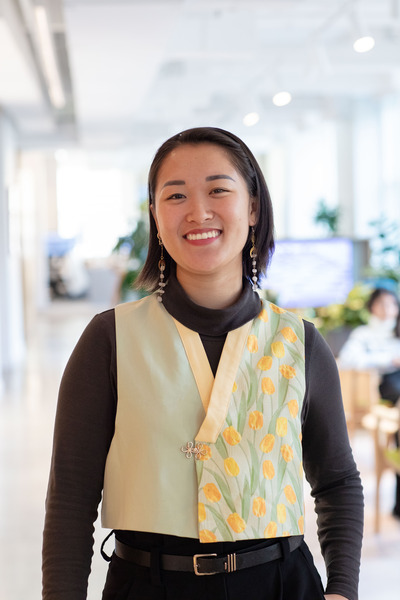
A Senior Specialist on KPF’s Environmental Performance (KPFep) team, Christina collaborates with internal design teams and consultants, using an evidence-based approach to integrate sustainable design thinking into projects of all types. Working across multiple programs, scales, geographic regions, and design stages, Christina helps craft solutions specifically tailored to each project.
Her work on the Singtel Headquarters in Singapore supported the design of a net-zero, mixed-use development that will meet GreenMark Platinum and ILFI Zero Carbon requirements. Leading studies focused on thermal comfort, daylight, and operational and embodied carbon reductions, she worked closely with the client and consultants to help meet the project’s ambitious targets.
Within the firm, Christina leads sustainability technical integration and education, and is the co-chair of KPF Public—a community group that supports pipeline efforts and internal education around diversity. Christina has also presented at conferences such as ASHRAE and IBPSA and published original thermal comfort research.
As co-chair of the AIANY Committee on the Environment Policy subcommittee, Christina advocates for the future of the built environment. She has served as an adjunct faculty member at the New York City College of Technology and guest lectures at Carnegie Mellon and Columbia universities.
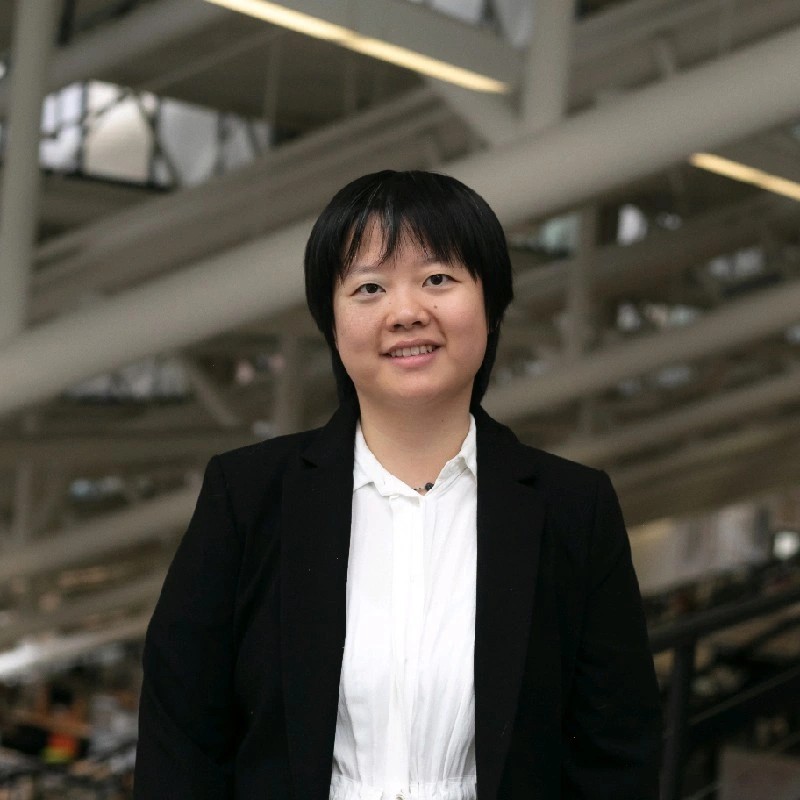
Yiwei (Lucy) Lyu is an Assistant Teaching Professor at Carnegie Mellon School of Architecture. Her teaching and research focus on building technology, architectural simulation, and carbon-aware design, exploring how computational tools and environmental science can empower architects to build resilient, sustainable environments.
Lyu’s research investigates how buildings can harness thermal energy storage and respond to real-time grid emission signals to reduce operational carbon without sacrificing occupant comfort. By bridging high-fidelity building performance simulation with city-scale energy dynamics, her work connects individual architectural design decisions to broader climate and energy policy. She is particularly interested in early-stage design methodologies under uncertainty, integrating Monte Carlo simulation and surrogate models to advance life-cycle assessment (LCA) tools.
Lyu holds a Doctor of Design (DDes) from the Harvard Graduate School of Design, a Master of Science in Architecture Studies (SMArchS) in Building Technology from MIT, and dual bachelor’s degrees in Architecture and Mathematics from the University of Southern California. With professional experience across architectural practice and interdisciplinary research, she brings a rigorous, mathematically grounded, yet design-centric perspective to architectural education.
